
Moving and Feeding Round Bales This Winter: Tractor and Loader Basics
11/10/2026
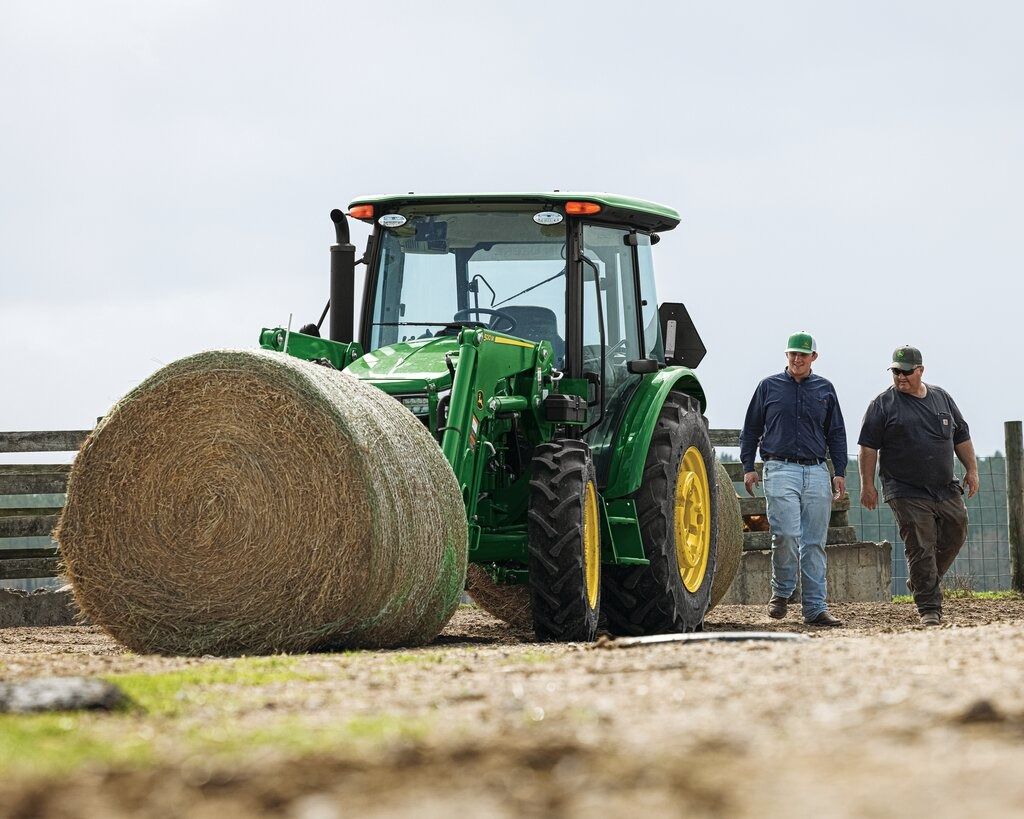
The good news is that the right setup makes feeding faster and safer. Below is everything you need to move round bales with confidence, plus practical tips for feeding them well.
What You Need to Move Round Bales
The tractor and loader must match the size and weight of the bales you handle.
A Strong Tractor
You need a tractor with enough weight and horsepower to lift heavy bales. Weight matters as much as horsepower because it keeps you planted.
For most hay and cattle operations, these John Deere models are a good place to start:
A Capable Loader
Think of your loader as the arms and your bale spear as the hands. The bucket stays parked for bale work. The loader’s job is to lift and carry the spear and bale safely. That’s why its lift capacity matters so much.
Here’s how a few John Deere loaders line up:
As a bonus, John Deere M- and R-Series loaders come with a hydraulic shut-off valve, which keeps the loader from dropping suddenly.
A Bale Spear or Bale Hugger
Never carry a round bale in a loader bucket. A round bale can roll out and back down the loader arms toward you. A bale spear mounts on the loader where the bucket normally goes and pins the bale in place, so it can’t roll or shift.
Swap Your Bucket for a Bale Spear in Minutes
Why it matters in winter:
Always follow your operator’s manual when connecting or disconnecting attachments, and make sure both locking pins are fully engaged before lifting.
Safety Tips for Moving Bales
Most bale-handling accidents come down to three things: carrying the load too high, too little weight on the back, or moving too fast. These tips tackle each one.
Keep Bales Low
Carry the bale just high enough to clear the ground. It’s tempting to raise it for a better view, but a high bale lifts the tractor’s balance point and pushes it forward. That makes a sideways rollover far more likely, especially on uneven ground.
Add Rear Ballast
Weight on the back of the tractor balances the bale on the front. Without it, your rear wheels lose grip and your steering gets light.
You can add ballast in several ways:
Stay within your tires’ load limits, and check your operator’s manual for the right ballast amount for your tractor and loader.
Move Slow and Steady
Drive at a pace that gives you time to react. Ease into stops and turns. Watch for frozen ruts, stumps, and soft spots, which are common in Piedmont clay after a thaw.
Wear your seatbelt with the ROPS (rollover protective structure) up, and keep people and animals well clear of the loader. A bale at walking speed is just a chore. Rushing it is how a chore turns into an accident.
Feeding Tips for Round Bales
Good feeding comes down to clean bales, controlled access, and steady placement. Get those right, and you’ll protect your animals and stretch your hay further.
Remove All Net Wrap or Twine
Use Feeders or Unrollers
If you’re feeding horses, choose a feeder made for them. Look for designs without V-shaped openings that can trap a leg or head.
Secure the Bale
Set feeders on level, well-drained ground, and move them around through the winter to keep mud in check. Lower the bale all the way into the feeder, and make sure it sits steady before you back the spear out.
Never set a bale on a slope where it could roll. A loose round bale can pick up speed fast, break through fences, and even reach a road.