John Deere’s New V-Series Round Baler, Put to the Test in the Field
8/25/2026
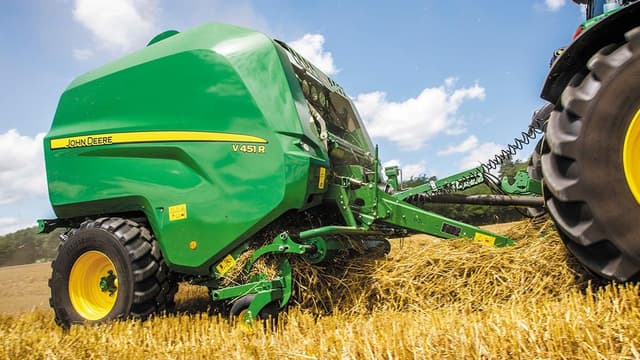
When you're baling in the middle of a drought, working with whatever cover crop you've got instead of the hay you were counting on, the last thing you need is equipment that fights you. That's the situation one Virginia farmer found himself in this season — pulling silage bales from a high-moisture rye cover crop because the hay crop simply wasn't there. It's exactly the kind of unpredictable season where having a baler you can trust matters most.
To help make that call easier for other owners weighing a baler upgrade, our team at Virginia Maryland Tractor loaned out a demo unit of John Deere's new V-Series round baler so it could be run side-by-side against a familiar M-Series machine, in real field conditions, on the same crop, in the same afternoon. Below is what came out of that comparison. Here are the specs, what's actually new, and the field notes from someone running both machines back to back.
Why Compare Two Balers in the Same Field?
Spec sheets tell you what a machine can do. They don't tell you how it feels to hook up, how forgiving it is when your windrow isn't perfectly straight, or whether the net wrap is going to fight you on your first ten bales of the day. That's something that has to be proved in a side-by-side test like this one, and it's why we think it's worth sharing with anyone in our area who's trying to decide whether it's time to move up to a new baler.
What's New: V-Series vs. the Previous M-Series
The two machines have a lot in common, but a few differences stood out immediately once both were hooked up and running:
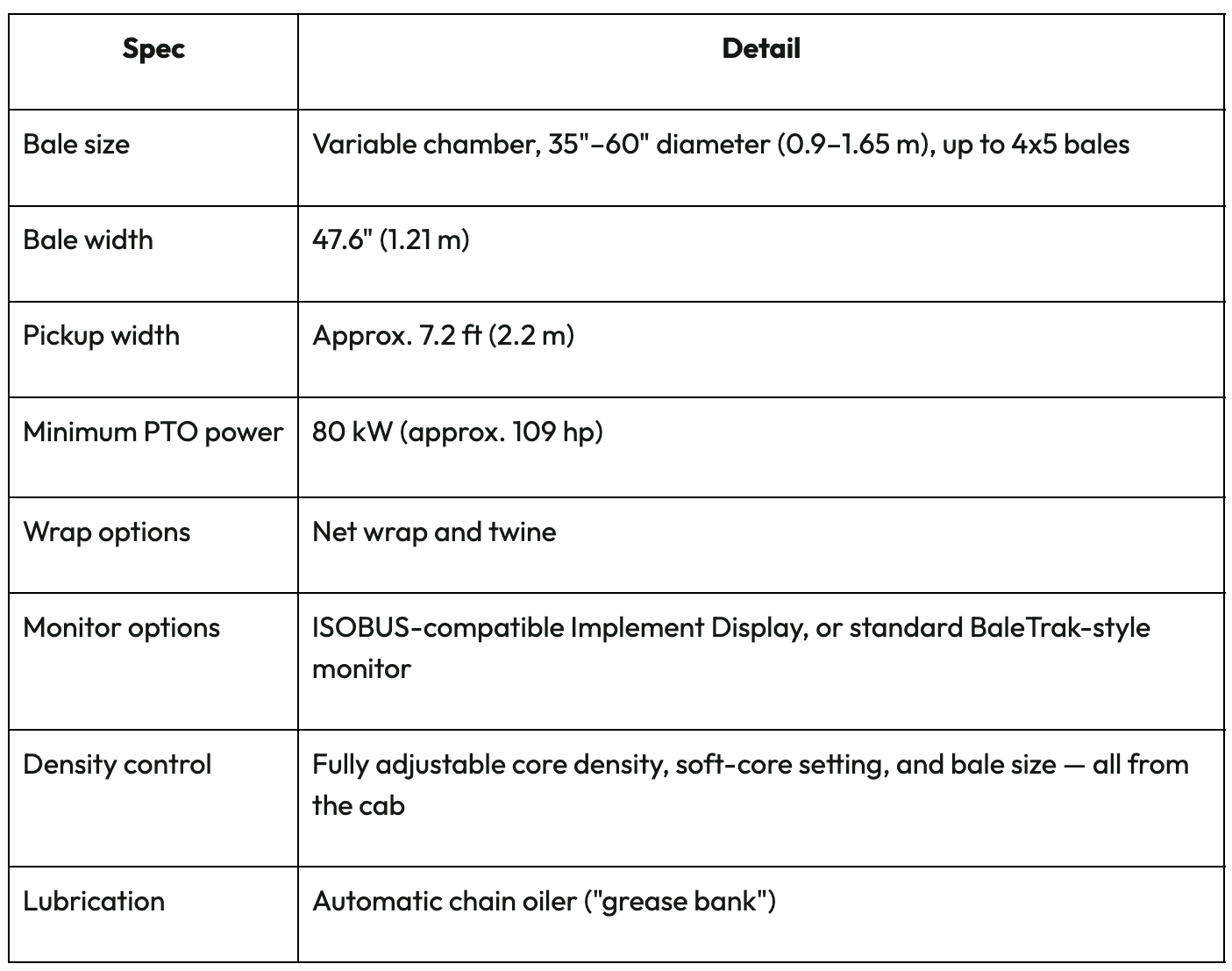
V451M Quick Specs
Spec figures reflect published John Deere V451M specifications and should be double-checked against the current model year before publishing, since baler configurations can vary by option package.
Field Observations: How It Actually Ran
Put to work on a field of high-moisture rye silage, the V-Series baler turned in a solid first outing:
Is It the Right Fit for Your Operation?
Whether the newer V-Series makes sense for you really comes down to what you're running now and how you use it. If chain maintenance, tractor strain, or windrow precision have been a headache with an older baler, the changes above are worth a closer look. If your current setup is running well and doing what you need, there's no rush — the M-Series machines are still solid, dependable balers in their own right.
Either way, our team is always glad to talk through what's changed, what a demo unit could look like for your operation, and what makes sense given your acreage, crop type, and current equipment. Reach out to your local Virginia Maryland Tractor location any time you'd like to talk it through.
Self-contained jack. A welded, two-speed jack that never has to be removed or repositioned — pull it out for fast movement, push it in for higher-torque, lower-effort adjustment right down to the ground.
Wider, more forgiving pickup. The V-Series uses a wider MegaWide-style pickup versus the standard-width pickup on the older M-Series unit. In practical terms, that means more room for error on windrow placement. The operator noted it was noticeably easier to keep the machine fed without having to track the row as precisely.
Independent pickup drive. Rather than pulling pickup power through the same chain-and-gear path as the rest of the baler, the V-Series pickup is driven separately. The result the operator noticed in the cab: less overall load and stress transmitted back to the tractor.
Automatic chain lubrication. The V-Series includes a "grease bank" style oiler that continuously lubricates the internal chains with a simple grease gun setup, rather than requiring each grease zerk to be found and greased by hand as on the older model. This small feature has a real payoff for anyone trying to protect chain life over the long run.
Updated bale-ejection latch system. Instead of the standard spring-and-lever kicker used on the previous generation, the V-Series uses a lever-based system to hold the bale from rolling back into the open gate — similar in concept, but a different mechanism underneath.
ISOBUS-ready monitor integration. The V-Series is built to run through the tractor's own in-cab display via ISOBUS, rather than requiring its own standalone monitor. That means bale shape, size, and density settings are all managed from the same screen the operator is already using to run the tractor.
Standard flotation tires. The V-Series comes with larger flotation tires as standard equipment, aimed at reducing compaction and improving flotation in softer field conditions.
72 bales were made in the initial run, with the operator noting the crop fed into the machine well even when pushing it hard.
Bale density held up. Running at roughly 60% density, the operator found the bales comparable in firmness to the older M-Series baler running at a higher density setting. This suggests the V-Series can produce a denser, more uniform bale at a lower relative setting.
A rough start with net wrap. Like most balers fresh out of the gate, the net wrap caught on a roller during the very first bales of the day. Once that was cleared, wrapping ran cleanly through the rest of the session.
One recurring nuisance: the gate latch. The rear gate's two side latches occasionally wouldn't fully engage when hay debris built up around them, requiring a quick manual clean-out. Not a dealbreaker, but worth knowing about for anyone budgeting maintenance time.
Noticeably less strain on the tractor. With the pickup driven independently rather than through the main chain path, the operator reported the baler felt like less of a load on the tractor compared to running the older model.
Easier in-cab adjustments. Because the settings run through the tractor's existing ISOBUS display rather than a separate monitor, dialing in density, bale size, and wrap counts was described as "a lot more user-friendly" than working from the standalone monitor on the older unit.